

Written by Kylee Simmons, NRP
Paramedic & Stop the Bleed Instructor
The Bleed Starts
You don’t expect to save a life when you leave your house in the morning. Most emergencies don’t announce themselves and have a habit of showing up when we are not prepared, emotionally or physically. After 8 years on 911 ambulances, I’ve learned that bleeding recognition and bleeding control are areas that are severely lacking in public education. And to no one’s fault; this area of education has been neglected for a while, and I’m not sure why. I’ve witnessed situations that could have been greatly altered had there been a presence on scene that understood hemorrhage control. I’ve been a Stop the Bleed instructor for almost a decade because of situations like this.
Bleeds can happen anywhere, and not just because of a traumatic injury. A car accident on your commute. A workplace injury. An undiagnosed medical emergency. A fall at home. In the first moments after a serious injury, before sirens and flashing lights arrive, survival depends on whoever is already there and what they do. Be the person who knows what to do and how to do it.
Uncontrolled bleeding is the leading cause of preventable death after traumatic injury. People often don’t die because help doesn’t exist; they die because it arrives too late. Severe hemorrhage can be fatal in as little as three to five minutes. Depending on where that bleed is coming from, those numbers can get even smaller.
The Stop the Bleed (STB) program was created to close that gap. It teaches everyday people how to recognize life-threatening bleeding and take immediate, effective action using simple skills: direct pressure, wound packing, and tourniquet application.
Why Bleeding Is Different Than Most Emergencies
Bleeding emergencies do not wait. Severe hemorrhage does not pause while help is on the way. Without intervention, irreparable damage and death can occur rapidly, often before professional help arrives. Additionally, in the case of 911, the response times of those providers vary greatly based on the location and structure of the local 911 system. Unfortunately, EMS is dealing with a national staffing crisis, which only furthers the need for the public to partake in medical education like STB.
The value in knowledge of hemorrhage control compounds is when used in conjunction with appropriate tools, but those tools must be used correctly. They must also be accessible, and, unfortunately, some of the equipment can be costly. This is where the value in the knowledge of hemorrhage control comes in; STB teaches you the foundations of hemorrhage control, so one can consider various means of appropriate hemorrhage control.
Most people go through their day with little understanding of how vulnerable we are to severe hemorrhage, and that’s not a bad thing. The average person experiences these types of situations at such a low frequency that the information finds a home in our brain, but not at the front of it. That lack of exposure not only creates anxiety around the bleed itself, but also an unfortunate over-confidence in bleeding recognition, and ultimately a delay in care.
What Is Stop the Bleed?
“Stop the Bleed” is a national and international initiative led by the American College of Surgeons Committee on Trauma (ACS COT) to “bring knowledge of bleeding control to the public and build national resilience” (About | ACS Stop the Bleed). The program focuses on recognizing life-threatening bleeding, stopping the bleed, and maintaining control until help arrives.
While the previous paragraph’s overall statement is valuable, I feel like it’s important to point out the last line of the statement and offer a caveat; “until help arrives” is often the beginning of complacency and is a point that should not carry much stock in how you manage a sick or injured person. If you witness the bleed, believe that you are a capable person, and remember the fact that when we call for help, we’re asking for someone with experience or more resources, not just competence. You are competent and are the help that person needs for the time being.
STB Programs have a unique opportunity to support and involve all levels of the public on a common theme and idea; learn a skill to help your fellow man. Hemorrhage control is a fundamental but integral skill to a well-prepared person and is seldom purposeless. For that reason, I greatly encourage and celebrate the desire to learn these skills if not “just because”.
Another bonus? The course is short, intentional, and hands-on. You’ll actually apply the tourniquets, you’ll actually pack the (simulated) wounds, and you’ll come to understand why we do what we do in pre-hospital hemorrhage control.
The Skills That Save Lives
Not all bleeding is a life-threatening emergency, and not all bleeding happens in places that help you determine how bad the bleed really is. An arterial bleed on grass looks different compared to a venous bleed on a plastic surface. This course will help you recognize different types of bleeding and what to do when you’re not sure.
At its core, our STB program will teach you about the different types of bleeding and which bleeding control option is the most appropriate until professional help arrives. Our goal is to teach the foundations of bleeding control so you can look at any situation and pick the right tool with whatever you have in reach. We will also teach you about wound packing, junctional tourniquets, hemostatic gauze, and other tools you might encounter.
There are a number of bleeding control devices out there, and figuring out which of them you should get can be overwhelming. This class may help you figure out which devices are the most suitable for you and your needs. The needs of the person using the equipment are just as important as the purpose of the equipment. Depending on your instructor, they may introduce you to different types of tourniquets or different methodologies; that’s the beauty of the STB program. Our instructors with Idaho Medical Academy have unique and diverse backgrounds that offer crucial insight for instructors, like myself, who have provider experience but little layperson experience. And before you question the value in layperson experience, the experience of the inexperienced is how we improve in any setting, but especially in life-saving situations that the everyday person may encounter.
Why Civilians Matter
Most emergencies happen far from hospitals. When civilians know how to act, survival improves, and complacency decreases. Knowledge of bleeding control helps transform initial panic into purpose and provides a steady footing in an otherwise chaotic situation. In my experience as a 911 Paramedic, bleeding is one of the most dramatic and overwhelming situations I approached, regardless of the severity of the bleed. The general fear around bleeding is completely understandable (and relatable), but learning to “stop the bleed” provides skills other than bleeding control, like general confidence and competence. Confidence in scary situations is an art form, and educational steps like Stop the Bleed only strengthen that capability.
Obviously, this program is designed for everyone, but I feel it is necessary to endorse this type of program for our younger populations. The fearless ones, the ones who are out figuring out what it means to live an adventurous life. It is imperative that we teach kids/teens basic life-saving skills such as Stop the Bleed, First Aid, and Infant/Child/Adult CPR.
Whether you’re an athlete, a long-haul truck driver, an artist, a water sports enthusiast, a mountain-biker, a BSU student who walks to work, a caregiver, or a first responder, this knowledge is priceless and is best when it’s shared. Aside from gaining the education needed to actually stop the bleed, you can work with STB programs (like us at IMA!) to become an STB instructor and provide education for your community! IMA can and wants to help. Contact us today, or give us a call at (208) 996-9248 for more information. View our calendar to see upcoming classes and to sign up for a course.
Training Overview
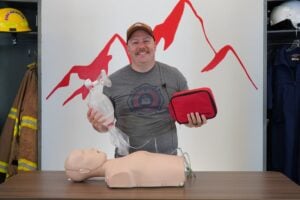
Training typically lasts 60–90 minutes and focuses on hands-on skill building and confidence. The program includes demonstrations on mannequins and uses training equipment specifically for hemorrhage control. There will be a light PowerPoint presentation to facilitate conversation, but the program is predominantly hands-on skills and application. You’ll work with an STB instructor and anyone else who signs up for the course. All supplies will be provided.