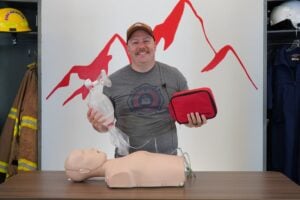


Every year, people survive traumatic injuries because someone nearby knew exactly what to do. Tourniquet application is one of those skills that looks simple on the surface but requires real hands-on practice to perform correctly under pressure. Whether you are hiking a remote trail, riding motorcycles, or just want to be prepared for the unexpected, understanding how tourniquets work could save a life.
Why This Skill Matters
Uncontrolled hemorrhage is the leading cause of preventable death from traumatic injury, accounting for up to 40% of trauma fatalities. The Stop the Bleed campaign has trained over 2 million people across the United States since 2015, and research consistently shows that bystanders who act within the first three to five minutes dramatically improve survival odds. You do not need a medical background to make a difference. You just need to know what to do.
When Does a Tourniquet Actually Get Used?
Tourniquets are not a first response to every cut or scrape. They are designed for one scenario: uncontrolled bleeding that cannot be managed with direct pressure alone. The clearest sign is bright red blood spurting in rhythmic pulses, which indicates arterial bleeding from the high-pressure circulatory system. Venous bleeding tends to ooze steadily and appears darker in color.
If direct pressure and wound packing have not controlled the bleeding within a few minutes, a tourniquet is appropriate. The guiding principle is simple: if the bleeding cannot be stopped and the patient is at risk of dying from blood loss, a tourniquet goes on.
Where the Tourniquet Goes
Placement matters enormously. Two rules to internalize before anything else:
- Never place a tourniquet over a joint. Knees, elbows, and ankles lack the compressible tissue mass needed to collapse the artery beneath.
- Place the tourniquet at least 2 to 3 inches above the wound. Many trained providers go “high and tight,” as far up the limb as possible, which is standard in tactical and wilderness medicine training.
Tourniquets only work on limbs. Bleeding in the chest, abdomen, neck, or head requires different techniques entirely. If the wound is near a joint, go above the joint even if that means the tourniquet is further from the actual injury site.
The Three Most Common Tourniquet Types
The CAT tourniquet (Combat Application Tourniquet) is the most widely carried by EMS agencies, fire departments, and law enforcement. It uses a flat strap, a windlass rod you turn to increase compression, and a locking clip to hold the windlass in place. Pre-size the loop before sliding it onto the limb to avoid fumbling with bloody hands under pressure.
The Soft T tourniquet works on the same principle but adds a built-in tension indicator that disappears from view once enough initial tension has been applied before you begin turning the windlass. It also uses a securing triangle rather than a clip to lock the windlass in place.
The RATS tourniquet (Rapid Application Tourniquet System) looks completely different from the other two. It uses a three-finger loop and a cleat system instead of a windlass. You wrap it around the limb to build 1 to 2 inches of width and secure it in the cleat. It is compact, lightweight, and popular in backcountry and wilderness settings where pack weight matters.
How to Know It Is Working
Effective tourniquet application means the bleeding has stopped. That is the only metric that matters in the field. Once tightened, you should find no detectable pulse below the tourniquet. This is expected and confirms the artery has been adequately compressed.
After tightening, document the time of application on the tourniquet itself. Some providers also write “TQ” and the time on the patient’s forehead with a permanent marker so any provider who takes over care immediately knows a tourniquet is present.
Reassess every few minutes. As tissue compresses and blood volume decreases, the fit can loosen. Key signs to monitor include:
- Bleeding restarting at the wound site
- Return of pulse below the tourniquet
- Signs of shock: pale skin, rapid weak pulse, confusion, fast breathing
What About Leaving It On Too Long?
Older training suggested limb loss could occur within a couple of hours of tourniquet application. Modern research has revised that significantly. Studies now show tourniquets can safely remain in place for six hours or more in healthy patients, and military data from extended field care scenarios shows limbs surviving tourniquet times of 10 to 12 hours or longer.
The mindset shift is critical: do not hesitate because you are worried about the limb. Apply the tourniquet. Protect the life. Let the hospital manage what comes next. And once a tourniquet is placed, it stays on until the patient reaches surgical care. Do not remove it in the field.
Gear Worth Trusting
Not all tourniquets are created equal. Off-brand versions made from lower-quality plastic have documented failure rates at exactly the wrong moment. Windlasses snap, buckles strip, and Velcro gives out. Name-brand CAT and Soft T tourniquets run $20 to $30. That is a small investment for equipment you are trusting with a life. Store your tourniquet somewhere you can access it in seconds, and check it periodically for wear, UV damage, and Velcro quality.
Practice Before You Ever Need It
Reading about tourniquet application and applying one under stress are two completely different experiences. Your hands need to know the steps before your brain catches up in an emergency. That is why practice is not optional. It is the difference between hesitation and action when someone’s life is on the line.
At Idaho Medical Academy, we offer several courses designed to give you exactly that preparation:
- Our Stop the Bleed and CPR courses are built for everyday people who want the confidence to respond when bleeding emergencies happen. No medical background required.
- Our Wilderness First Aid course covers tourniquet application alongside wound packing, fracture management, patient assessment, and full backcountry emergency response, designed for those who spend time far from definitive care.
- Our EMT program provides the comprehensive foundation to respond at a professional level, with hands-on training in hemorrhage control, airway management, patient assessment, and more.
You do not need to be a first responder to carry a tourniquet. You do need to know how to use one. Come train with us.